
 Clinically reviewed by Liz Marsh
MRI Clinical Lead
MRI for Claustrophobia: 5 Ways To Stay Calm
MRI or magnetic resonance imaging is one of the most powerful medical imaging tests available. It produces highly detailed images of the soft tissues, internal organs and bones in your body.
However, some people find lying down in an MRI scanner challenging due to anxiety or claustrophobia (fear of enclosed spaces and tight spaces).
Here, we’ll share our top tips for overcoming MRI anxiety and managing MRI claustrophobia so you can stay calm during your scan. First, it helps to understand how an MRI machine works.
How does an MRI machine work?
An MRI machine uses powerful magnets and radio waves to create images of the inside of your body.
The MRI scanner has a patient table that will slowly slide into the tunnel part of the scanner which is open at both ends and has lights inside it.
In an MRI scanner, a magnetic field is created around the person to be scanned. This affects the positioning of tiny particles of water in your tissues (protons).
Next, gentle pulses of radio waves are passed through the person’s body. This changes the positioning of the protons. When the radio waves stop, the protons go back to their original positions, causing them to release energy.
The energy signals are detected by the scanner and turned into multiple 2D and sometimes 3D cross-sectional images.
MRI machines and claustrophobia
People who have claustrophobia or feel anxious may find the environment of an MRI machine challenging. In extreme cases, they may have a panic attack during a scan.
This is because the tunnel that a person lies in during their MRI scan can make it feel like you’re closed in and isolated.
These anxious feelings can be made worse by the need to stay completely still to help ensure clear scan results. The loud banging noises created by the MRI machine during the scanning process can also cause stress.
Signs of anxiety or claustrophobia during an MRI scan include your heart beating faster, breathlessness, a dry mouth, a tight feeling in your chest, and feeling nauseous, dizzy and/or hot.
How wide bore and open MRI machines can reduce anxiety
In a standard MRI machine, the tunnel that a person must lie in is 60cm in diameter. Although this is large enough for the vast majority of adults to comfortably lie down, if you’re feeling anxious about your scan, you may feel claustrophobic.
A wide bore MRI scanner can help reduce the claustrophobic feeling as the tunnel is 70cm wide. This allows for more space around the person being scanned.
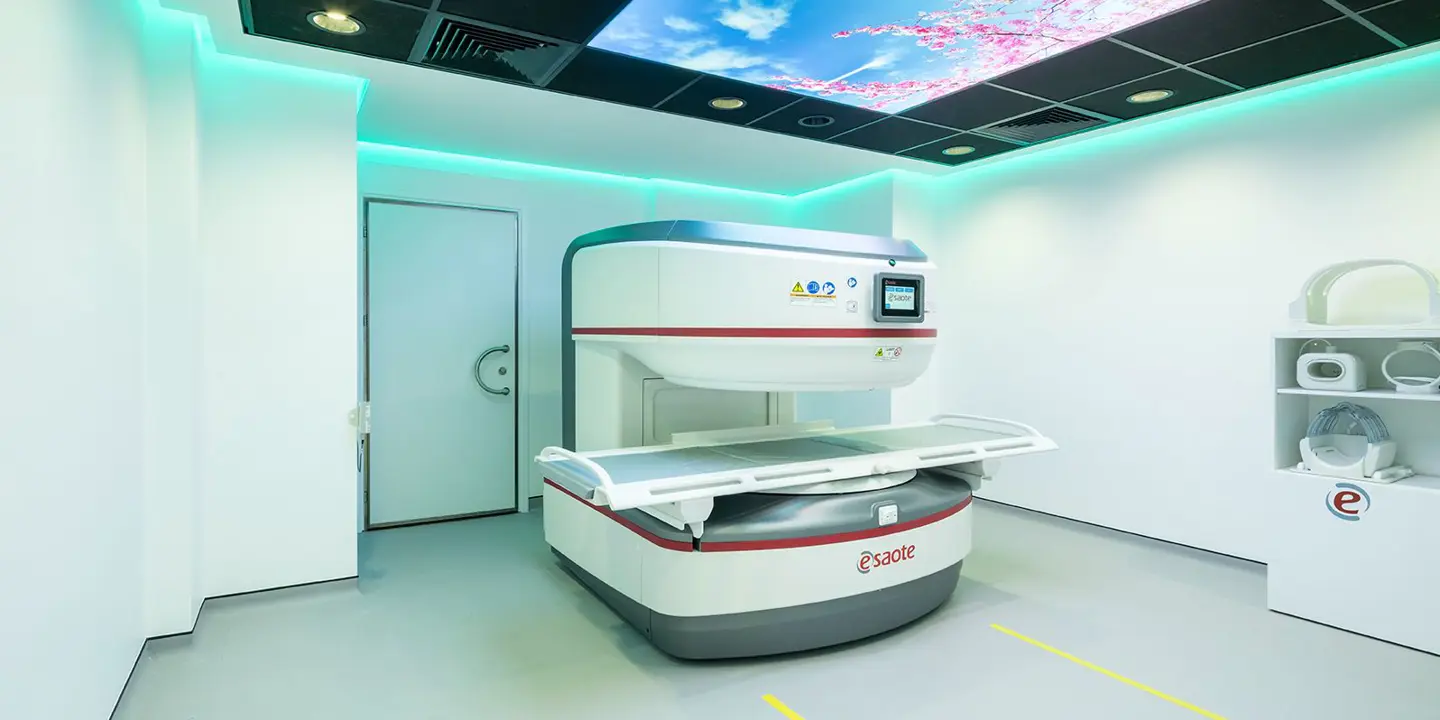
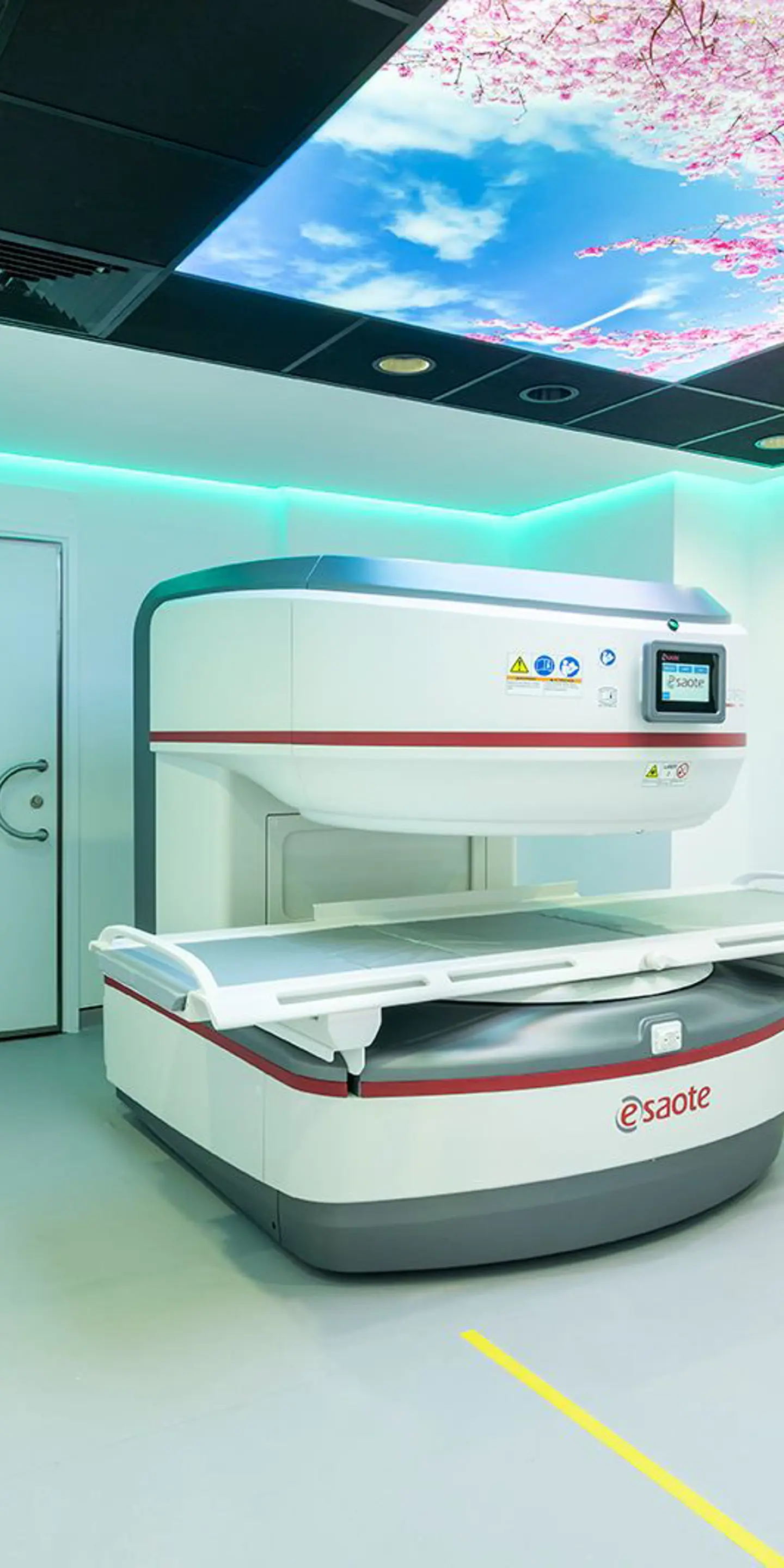
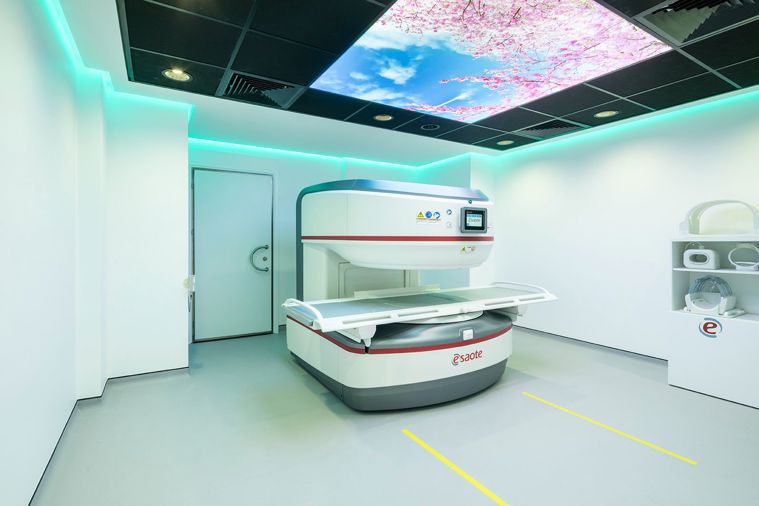
Another option for people struggling with claustrophobia or anxiety during an MRI exam is an open MRI machine.
Truly open MRI systems are open on up to 3 sides. During these open MRIs, the person being scanned can see the MRI room around them. An upright MRI machine is open at the front with the person to be scanned sitting upright.
Both a wide bore MRI scan and open MRI scan, therefore, allow for greater patient comfort.
5 tips for reducing MRI claustrophobia and anxiety
-
Know what to expect
It’s easier to manage any anxiety when you know exactly what to expect during your MRI scan. Your care team will advise you about the specifics relating to your MRI appointment.
For all MRI scans, you will be asked to remove any metal objects from your body. You may also be asked to change into a hospital gown.
Once the scan begins, you need to remain completely still and will hear loud noises made by the machine.
If at any point you feel anxious, you can use the squeeze ball given to you by your care team. When you squeeze the ball, it signals your care team to immediately stop the scan. You can then use the 2-way intercom built into the MRI scanner to speak to your care team for reassurance, and end the scan if you want to.
At certain points during your scan, you may be asked to hold your breath – this is usually needed for scans of the chest or abdomen area. You will only need to hold your breath for a few seconds at most.
Depending on the part of your body that needs to be scanned, your care team will let you know whether you will be slid into the scanner head-first or feet-first.
The part of your body being scanned needs to be in the middle of the scanner. This means feet-first scanning is usually used when the lower body is scanned. In these cases, the head is usually positioned near the opening of the tunnel or outside the tunnel, which feels less closed in.
-
Practice breathing exercises
Deep breathing exercises help your body relax and focus your mind on your breath instead of your surroundings. This can help time pass faster.
A common deep breathing exercise to reduce anxiety is box breathing:
1) Breathe in slowly for a count of 4.
2) Hold this breath for a count of 4.
3) Breathe out for a count of 4.
4) Hold your breath for another count of 4.
Repeat these 4 steps as often as you need to stay calm.
You can also try mindful breathing. This doesn’t involve counting but focusing your mind on your breathing as you inhale and exhale, while repeating a positive word or phrase silently in your head.
-
Listen to music
To help reduce anxiety, you can play music during your scan. Your care team will provide you with special headphones that you can safely use in the MRI scanner.
You will still be able to hear the sounds of the machine. However, if you can focus your mind on the music, it can help the scanning noises fade into the background.
-
Wear prism glasses
Prism glasses are specially made to be safely worn while inside an MRI scanner as they are non-magnetic.
The glasses contain prisms, which bend the light. This means that while lying flat and wearing the glasses, you won’t see the ceiling of the tunnel you’re in. Instead, you’ll see your feet, the opening of the tunnel and the room beyond it.
If you experience claustrophobia, this visual trick can help your mind relax.
-
Wear earplugs or MRI-safe ear defenders
The loud noises of an MRI scan can heighten feelings of anxiety and claustrophobia. Your care team will provide MRI-safe earplugs and headphones to reduce the noise to a safe and manageable level.
Ready for a more comfortable MRI scan?
By following the tips above and choosing a healthcare provider who can cater to your needs, you can enjoy a more comfortable experience with your MRI exam.
If you’re feeling anxious about having an MRI scan, our team is ready to help. With friendly staff ready to provide reassurance and extra support, and some imaging clinics offering open and upright MRI, you don’t need to fear having an MRI.
Simply let us know about your anxiety when you book a private MRI scan with Vista Health.
Sources
https://www.vista-health.co.uk/blogs/articles/differences-in-private-mri-scans/
https://www.bhf.org.uk/informationsupport/heart-matters-magazine/wellbeing/breathing-exercises#box