

 Clinically reviewed by Liz Marsh
MRI Clinical Lead
Open MRI vs Wide Bore vs Closed: Which is Right for You?
Magnetic resonance imaging (MRI) machines provide high quality images of the inside of your body. Most people are aware of traditional closed MRI machines. But did you know about wide bore and open MRI machines?
Here, we will explore the features of open MRI vs closed MRI, including the wide bore MRI scanner, so you can choose the right MRI scan for you.
Understanding MRI technology: the basics
MRI stands for magnetic resonance imaging and is an advanced medical imaging tool. It produces the highest resolution images possible of soft tissues and bones in your body. This medical technology was developed in the 1970s by English physicist Sir Peter Mansfield and was first used on patients in the UK in 1982.
Over the decades, MRI imaging has continued to advance with the development of different types of MRI machines and more powerful scanners. Before delving into open vs closed MRI, it helps to understand how MRI works.
How MRI scanners work
MRI uses radio waves and strong magnets instead of radiation. During the scanning process, the magnets create a painless magnetic field around the patient lying down on the table in the machine.
This magnetic field affects tiny particles called protons, which are found in water molecules in tissues throughout the body.
Once the magnetic field is generated, gentle pulses of radio waves are passed through the patient in the MRI scanner. This changes the positioning of the protons. When the radio waves stop, the protons revert to their original positioning and, in doing so, release energy.
The energy signals are picked up by the MRI scanner and processed into a 2D image of a cross-section through the body. Multiple 2D cross-sections are collected in different directions. Sometimes 3D images are also obtained.
As internal organs and structures can be viewed from multiple angles, it’s easier to detect signs of disease or damage. This is a key benefit over standard ultrasound and X-rays.
While CT scans also produce detailed images, MRI generally offers better contrast resolution in soft tissues than CT scans. This means it can detect subtle changes both between and within tissues.
Common uses for MRI in the United Kingdom
MRI scans are often used to investigate symptoms and help diagnose a wide range of medical conditions.
However, private MRI scans can also be used as part of a health assessment. By checking the health of your body’s internal structures and internal organs, a private MRI scan can catch medical conditions before any symptoms occur.
MRI is, therefore, used to help identify medical conditions for a preventative approach to your health as well as for diagnostics.
For example, MRI of the brain and spinal cord can help detect brain aneurysms, stroke damage, brain tumours, spinal stenosis and degenerative brain conditions such as multiple sclerosis.
Cardiac MRI can help diagnose congenital heart disease, cardiomyopathy, heart valve defects, and damage caused by a heart attack.
Abdominal MRI can detect diseases affecting a variety of organs, such as kidney disease, liver disease and pancreatitis, as well as tumours caused by cancer.
A pelvic MRI scan can also detect cancer, such as prostate cancer, womb cancer and ovarian cancer, as well as other conditions affecting the reproductive organs.
Bone and joint MRI can detect bone infections, bone tumours, slipped discs in the spine, and structural damage caused by injuries, such as tendon tears and ligament tears.
How to prepare for an MRI scan
Whichever type of MRI scan you have, you will need to remove all metal objects from your body before your scan. This includes clothing with metal buttons or zips, jewellery, hair accessories, piercings and any removable, medical devices.
This is because the magnets used in the MRI machine can cause metal objects to move or heat up, so removing them keeps you safe during a scan. If you have metal implants or shrapnel, you will be advised on whether or not you can have an MRI scan – some metal implants are compatible with MRI machines while others are not. For your safety, please declare any implants, foreign bodies or devices in or attached to your body.
Before your scan, you may be asked to change into a hospital gown. It’s a good idea to wear loose, comfortable clothing that’s easy to change out of.
Some MRI scans are performed with a contrast agent that your care team will give you before your scan. If you are having a contrast agent, you will be advised not to eatfor a certain number of hours before your scan.
MRI scans can take anywhere from 15 to 90 minutes, depending on the body part being imaged. You will need to remain still during your scan to ensure the images produced are clear. Relaxation techniques, such as mindfulness, can help you stay still. You can also listen to music during your scan via special headphones provided by your care team.
Every MRI scanner has a two-way communication system, allowing patients to talk to their care team during their scan. If you feel anxious or uncomfortable at any time during the scanning process, you can ask your care team to stop the scan using the squeeze ball (a soft ball you hold in your hand and squeeze to send an alert to the care team).
For peace of mind, tell your care team in advance if you’re worried about having an MRI scan so they can reassure you and help you through it.
Closed MRI: features and benefits
Structure and operation of a closed MRI machine
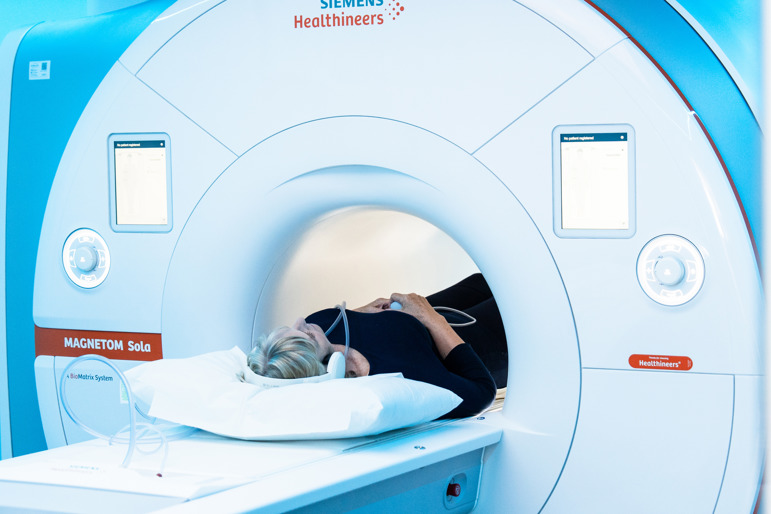
Traditional MRI scanners are closed MRI scanners, also known as closed bore MRI machines. This sounds very daunting, but the MRI machine has a tunnel that the patient table slides into which is open at both ends, and patients are able to talk to the care team via the communication system. In traditional closed MRI scanners, the diameter of the tunnel is usually 60cm.
Another feature of the closed MRI system is the high strength of the magnetic field produced, which is measured in Teslas (T). Most MRI machines have a magnetic strength ranging from 0.2–3T. The stronger the magnetic field, the clearer the images produced. A traditional closed MRI machine can have a magnetic field strength of up to 3T.
Why closed MRI is recommended for certain conditions
A closed MRI system allows the highest strength magnetic field to be used. This creates the clearest, most detailed images for a more accurate diagnosis.
Consequently, closed MRI is recommended for diagnosing conditions where more subtle changes need to be detected.
For example, when investigating small joints in the hands or the wrist, or detecting changes in multiple or small blood vessels (eg congenital heartdisease and cerebral small vessel disease).
Closed MRI is also better for locating brain lesions in neurodegenerative diseases (eg multiple sclerosis) and early signs of bone infections.
Wide bore MRI: bridging comfort and image quality
What sets wide bore MRI machines apart?
A wide bore MRI scanner is a type of closed MRI system ie the tunnel that the patient is slid into and is open at both ends. You can still communicate with your care team. . However, the tunnel is 70cm – 10cm wider than a traditional closed MRI scanner. The machine can have a magnetic field strength of up to 3T.
Patient experience in wide bore MRI scanners
The wider diameter of the tunnel in a wide bore MRI scanner allows for greater patient comfort. It’s often used for claustrophobic patients or larger patients, making them feel more at ease so they can complete their scan.
Open MRI: design and functionality
What makes an MRI “open”?
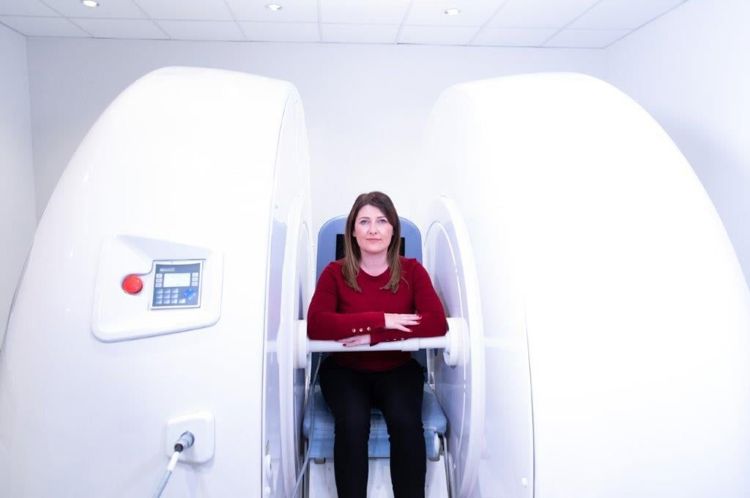
Truly open MRI machines refer to MRI scanners where up to 3 sides surrounding the patient are open. This open structure means the patient can see the room around them.
A magnetic field is still created around the patient, but the nature of open MRI systems means that the strength of the field is lower – usually a maximum of 0.6T.
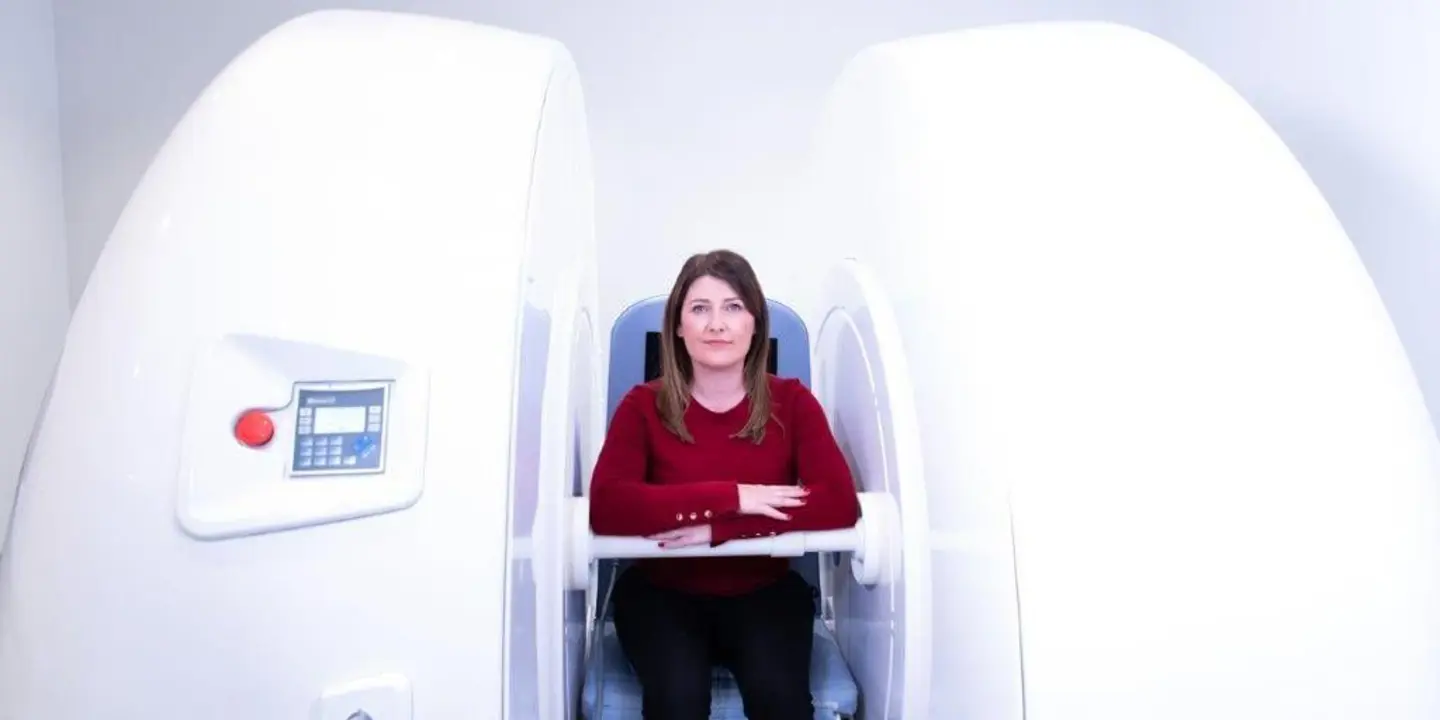
Open upright MRI scanners are not fully open. They are enclosed on 3 sides and open at the front. Some open scanners allow the patient to be seated upright.
Advantages of open MRI machines
An open MRI scan allows for greater ventilation. It’s, therefore, ideal for individuals who have claustrophobia or feel anxious.
An open upright MRI scanner is also helpful for individuals who struggle to lie down comfortably or who are having investigations relating to their back.
An open upright MRI scanner allows for the spine to be examined under stress ie when a patient is positioned upright as they would normally be for most of the day.
Comparing open vs wide bore vs closed MRI
Differences in image quality and diagnostic accuracy
Closed MRI scanners offer greater diagnostic accuracy as they produce higher resolution images compared with open MRI scanners. This is because their design allows a stronger magnetic field to be used.
Closed MRI is, therefore, more useful for picking up subtle changes caused by disease or injury. A traditional closed MRI machine produces clearer images than a closed wide bore MRI machine.
Scan duration, noise levels, and patient comfort
As closed MRI scanners can generate a stronger magnetic field than open MRI scanners, closed MRI scans are often faster than open MRI scans. This can be helpful for those who find the enclosed environment challenging as the MRI scan will be quicker.
However, for individuals who have more severe anxiety about being in a confined space, an open MRI scan is still preferable. The open structure of the open MRI scanner provides greater patient comfort and can help reduce stress levels during the scan.
Both closed and open MRI scans produce knocking, banging and humming noises. This loud noise is due to the coils in the MRI scanner that produce radio waves. However, the intensity of these noises is greater when the magnetic field is stronger.
Consequently, the sounds produced during a closed MRI scan tend to be louder than those produced during an open MRI scan as stronger magnets are used in closed MRI scanners.
Deciding which MRI scanner is right for you
Key factors to consider when deciding whether to have an open or closed MRI scan include whether you experience claustrophobia or are anxious about an MRI. In these cases, an open MRI scan may be more comfortable for you.
However, it’s important to note that your doctor will also need to consider certain factors when advising you about which type of MRI scan to have.
This will include the reason for having an MRI scan. If it’s to investigate symptoms, your doctor may recommend a closed MRI scan to help more accurately diagnose the suspected condition. If it’s part of a general health check and you don’t have any symptoms, an open MRI scan may be an option. Some scans can only be done on a closed MRI scanner - this is something we can advise you on.
Explore your MRI scan options today
It’s normal to have some anxiety over getting an MRI scan. However, there’s no need for anxiety to stop you from getting the MRI scan you want.
At Vista Health, we offer traditional closed, wide bore, open and upright MRI scans, so you can pick the scan that gives you the greatest level of comfort and peace of mind.
What’s more, you don’t need a referral from a doctor. Simply self-refer for your private MRI scan at one of our conveniently located imaging clinics.
Sources
https://www.vista-health.co.uk/blogs/articles/differences-in-private-mri-scans/
https://www.vista-health.co.uk/blogs/articles/open-vs-closed-mri
https://www.mayoclinic.org/tests-procedures/mri/about/pac-20384768
https://www.mdanderson.org/cancerwise/ct-scan-vs-mri--what-is-the-difference.h00-159616278.html