


Which Scan is Used to Detect Cancer? Essential Insights
When it comes to cancer, early detection can make a big difference to the success of cancer treatments. Medical imaging is an important part of early cancer detection. So, which scan is used to detect cancer?
There isn’t just one scan; several can be involved in cancer detection. This includes magnetic resonance imaging, computerised tomography, ultrasound and positron emission tomography.
Here, we will take a look at how these different scans work to detect cancer, how they compare to each other, and how you can prepare for your scan.
How MRI scans detect cancer
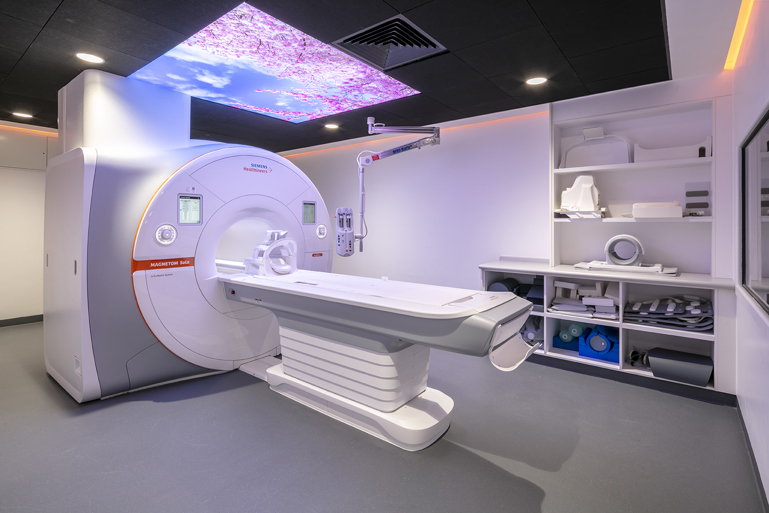
MRI stands for magnetic resonance imaging. An MRI scan can create detailed pictures of the inside of your body using strong magnets and radio waves.
An MRI machine has a large tube that the patient table is slid into. The tube contains magnets that create a magnetic field around a patient. It also contains coils to produce radio waves.
During an MRI scan, you’ll be asked to lie down on the patient table. It will then be moved into the tube. The magnetic field will affect the water molecules in your tissues. It causes small particles in these water molecules (protons) to line up.
Next, gentle pulses of radio waves will move these protons out of alignment. When the radio waves are stopped, the protons line back up. This releases energy that’s detected by the MRI scanner.
The energy signals are converted to grayscale images. This creates a cross-sectional image of one part of your body. More detailed cross sectional images are collected and processed by a computer to create a highly detailed 2D or 3D images of your tissues and internal organs.
MRI creates some of the highest resolution scan pictures of tissues. It can detect subtle differences both between and inside tissues, including detecting cancer in its early stages by identifying small tumours (clumps of abnormal cells).
CT scans in cancer diagnosis
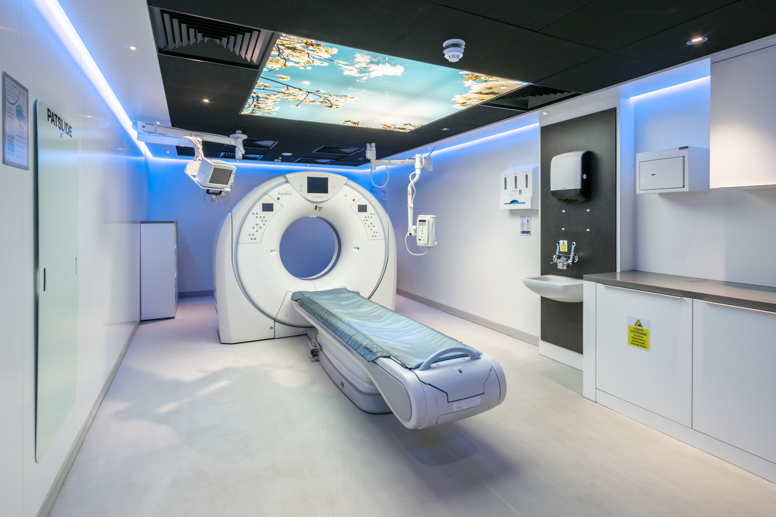
Computerised tomography (CT) is another imaging test that can create detailed images of the inside of your body. It uses X rays, which is a type of ionising radiation, alongside computer processing.
A CT scanner consists of a large doughnut-shaped ring, a patient table and a computer. During a CT scan, you will be asked to lie on the patient table, which will be passed through the ring.
The ring contains X-ray generators and X-ray detectors. It will send beams of X rays into your body. This is completely safe and painless. Some of the X rays pass straight through and some are absorbed by your body.
The X rays that pass through are picked up by the X-ray detectors to create images from different angles. These signals are sent to a computer to be processed into a 2D cross-section of one part of your body. As the ring moves around your body more cross-sectional images are collected.
These cross-sections are processed into one high-resolution 3D image of your tissues. Different areas of your body appear as white, black or varying shades of grey depending on the amount of X rays they absorb. This allows CT to reveal small changes in your body that could be due to disease, such as small lumps of cancer cells.
PET scans for identifying cancer
Positron emission tomography (PET) creates images of the inside of your body, specifically the real-time activity of cells in your tissues.
A PET scanner looks similar to a CT scanner. It has a patient table, a doughnut-shaped ring and a computer.
About an hour before your PET scan, you will be given an injection of a small amount of a radioactive material called a tracer. This tracer is safe and you will be given a very low dose. Most of the tracer will leave your body in a few hours, though it can take up to 24 hours for all of it to be removed.
Then, you will be asked to lie back on the patient table, which will be moved through the ring of the PET scanner. The ring contains PET detectors. These pick up signals released by the tracer.
These signals will be sent to a computer where they will be processed to form a detailed 2D cross-section of your body. The PET scanner will collect more cross-sections and process them to form a detailed 3D image.
Cells that are very active absorb a lot of the tracer. Cancer cells are particularly active so they can be clearly picked up on a PET scan.
The scan images are coloured according to the activity of the cells. Warmer colours (yellow, orange and red) mark out cells with high activity levels. Cooler colors (green and blue) mark out cells with low activity levels. Cancer cells show up as brighter, warm-coloured hot spots compared to normal cells.
PET is sometimes used at the same time as CT or MRI to provide detailed information on both the structure and activity of tissues. These scans are called PET-CT and PET-MRI.
Ultrasound for early cancer detection
Ultrasound uses high-frequency sound waves to create images of the inside of your body. These sound waves are beyond the limit of human hearing.
During your ultrasound scan, a small handheld probe will be passed over the part of your body that needs to be investigated. This probe will release sound waves into your body. The sound waves bounce back when they encounter boundaries between different tissues or areas of different densities.
Sound waves that bounce back are called echoes. Over 1,000 echoes can be detected in one second, which is what allows ultrasound to create live, real-time images.
Although ultrasound produces lower resolution images compared to MRI and CT, it is a faster, more cost-effective scan and does not expose you to any radiation. It is, therefore, often used for initial assessments to detect growths.
Comparing scans: which is most effective?
Ultrasound, CT, MRI and PET can be used to diagnose cancer and also to check if cancer treatment is working or whether the cancer has spread. The type of scan you have will depend on your symptoms and where in your body cancer is suspected.
You may initially have an ultrasound scan and then need other imaging techniques, such as MRI, CT or PET. It’s important to note that none of these scans can provide you with a definitive diagnosis of cancer. For a confirmed diagnosis, a tissue sample (biopsy) must be collected and examined under a microscope in a lab.
In general, MRI and CT produce higher resolution images than ultrasound. PET is the only scan that provides information on the activity of cells.
MRI offers better contrast resolution than CT. This means it is better at telling the difference between abnormal and normal areas within a tissue. CT offers better spatial resolution than MRI, which means it is better at detecting fine details.
How long does a scan for cancer take?
An ultrasound scan is quicker than MRI, CT and PET, and takes around 20–30 minutes.
Both PET and CT scans can take up to an hour to complete, while an MRI scan takes up to 90 minutes.
As a tracer needs to be given an hour before a PET scan, the whole appointment can take a few hours.
Similarly, a special dye called a contrast material may be needed for a CT scan or an MRI scan, so your appointment may take 2-3 hours. This includes staying at the imaging facility or scanning department for 15-30 minutes after your scan to check that you don’t develop an allergic reaction to the contrast agent.
How to prepare for a cancer detection scan
Whichever type of scan you have, you will need to remove all metal items, such as hair accessories, jewellery and removable medical devices. If you have metal implants, your care team will let you know which scan is compatible with them.
You may be asked to change into a hospital gown, so it’s a good idea to wear loose, comfortable clothes that you can change out of easily.
If you’re having a contrast dye, you may be asked to fast for a certain amount of time leading up to your scan. This means you should not eat or drink anything other than water.
For most scans, you will be able to take your medications as usual – your care team will let you know if this is not the case.
If you’re feeling anxious about your scan, it’s important to tell your care team so they can better support you.
During an MRI, PET or CT scan, while you’re positioned in the machine, there will be a two-way intercom, so you can always communicate with your care team. You can also listen to music during your scan using special headphones provided by your care team.
Get clarity on your health
If you have a medical history of certain cancers in your family and want the peace of mind of knowing where you stand with your health, Vista Health can help with a range of scans, including CT, MRI and ultrasound.
To find out which scan is right for you, book a GP consultation with one of our experienced GPs.
Sources
https://www.nhs.uk/tests-and-treatments/pet-scan/
https://my.clevelandclinic.org/health/diagnostics/10123-pet-scan
https://www.cancer.org/cancer/diagnosis-staging/tests/imaging-tests/ultrasound-for-cancer.html
https://www.cancerresearchuk.org/about-cancer/tests-and-scans/ultrasound-scan